
wine-cellar-design-custom-wine-cellars-hidden-rooms-secret-doors-wine-racks-luxury-wine-storage-climate-controlled-wine-room-wine-cellar-conversion-Murphy-doors-jib-doors-Nort-Dallas-carpentry-Collin-County-home-improvement-handcrafted-wine-racks-custom

Cellar design That Elevates Luxury Homes in North Dallas

Cellar design is the foundation of a wine space that protects valuable collections while transforming a home into a refined, functional showpiece. At Timber Creek Carpentry, every project blends custom craftsmanship, thoughtful engineering, and architectural precision to create wine environments that feel timeless, secure, and truly one of a kind.

Crafted Wine Spaces That Go Beyond Storage

A well-built wine room does more than hold bottles. It preserves flavor, supports long-term aging, and enhances the overall value of your property. Timber Creek Carpentry specializes in custom carpentry solutions that reflect the homeowner’s taste while respecting the technical needs of wine preservation.

Each project begins with a personalized consultation. During this process, layout, bottle capacity, temperature control, humidity balance, and airflow are carefully considered. As a result, the finished space delivers both beauty and performance.

Clients throughout North Dallas and Collin County trust Timber Creek Carpentry for high-end wine rooms, luxury conversions, and discreet architectural features that seamlessly integrate into existing homes.

cellar design Built for Performance and Visual Impact

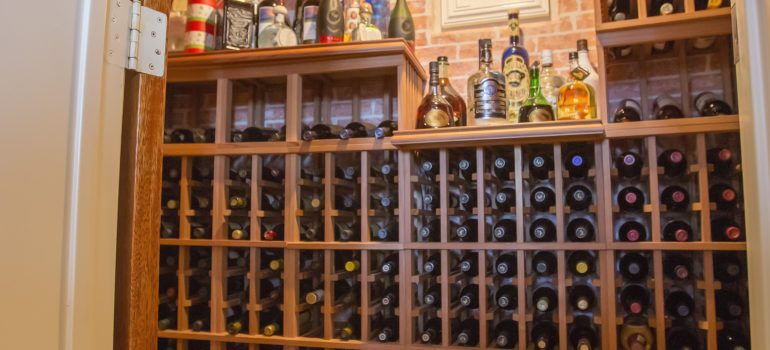
Proper construction is essential for wine longevity. Timber Creek Carpentry designs climate-controlled environments that maintain consistent conditions year-round. Custom wood wine racks allow for proper bottle orientation, efficient use of space, and elegant presentation.

Unused areas such as closets, under-stair spaces, or spare rooms can become stunning wine rooms with custom millwork, premium finishes, and precision installation. These transformations not only protect wine collections but also add architectural interest and resale value.

Homeowners who value privacy often pair wine rooms with concealed access points. A hidden entry can elevate security while creating a dramatic reveal for guests.

To explore the benefits of concealed spaces, read Why Have a Hidden Room in Your Home?.

Secret Doors and Hidden Wine Entrances

Hidden wine cellar doors are where craftsmanship and innovation meet. Timber Creek Carpentry creates secret doors, Murphy doors, and jib doors that disappear into walls, bookcases, or architectural details. These systems operate smoothly while maintaining the illusion of a solid surface.

This approach is ideal for wine collectors who value discretion, security, and unique design. Concealed entrances also work beautifully for safe rooms and private retreats.

For more insight into the lifestyle appeal of hidden spaces, visit Why Women Need a Hidden Room to Disappear From Family & Relatives.

cellar design That Adds Long-Term Value

Custom wine rooms and hidden architectural features are smart investments. High-quality millwork, premium materials, and expert installation contribute to increased property value and buyer appeal.

Strategic remodeling decisions can protect your investment even during shifting economic conditions. Learn more by reading Home Remodeling Strategies: Inflation vs. Deflation.

In addition, well-crafted wood elements throughout a home create visual continuity and elevate overall design. Staircase enhancements, trim upgrades, and custom cabinetry can further strengthen the return on investment. Discover how craftsmanship impacts value in The ROI of Installing Wooden Treads & Risers on a Staircase.

Why Choose Timber Creek Carpentry

Timber Creek Carpentry stands apart through attention to detail, premium materials, and proven expertise in luxury woodworking. Every project is custom-built to complement the home’s architecture while delivering reliable, long-lasting performance.

From intimate residential wine rooms to expansive luxury installations, the team approaches each project with precision and pride. Homeowners receive a tailored solution that reflects their lifestyle and protects their collection for years to come.

Resources

Read More

Wine Cellar Design Elevate Your Home with Custom Craftsmanship

Wine cellar design is more than just a functional space; it is an art form that combines precision, style, and long-term preservation for your wine collection. At Timber Creek Carpentry, we specialize in creating custom wine cellars that transform any space into a luxurious and highly functional showcase for wine enthusiasts in North Dallas and Collin County.

Transforming Spaces into Luxury Wine Cellars

Creating a wine cellar involves careful planning and attention to detail. Timber Creek Carpentry’s expertise in custom carpentry ensures that each wine cellar integrates seamlessly with your home’s architecture. From climate-controlled storage to elegant finishes, our designs protect wine while enhancing the beauty and functionality of your home.

We also excel in luxury wine room conversions, transforming basements, closets, or under-stair spaces into fully optimized wine storage. These conversions make it possible to turn previously unused areas into stunning and practical wine showcases.

Custom Wine Racking Systems for Optimal Preservation

A key element of exceptional wine cellar design is a custom wine racking system. Timber Creek Carpentry crafts handcrafted wood racks that prioritize airflow, durability, and wine aging. Each rack is designed to maximize storage efficiency without sacrificing aesthetics, allowing both casual collectors and connoisseurs to organize their collections beautifully.

Our attention to detail ensures that each wine storage solution is not only functional but also a visual centerpiece in your home. Whether your collection is small or expansive, we design every component for long-term performance and visual appeal.

Concealed Entrances and Secret Spaces

For homeowners seeking privacy and a touch of intrigue, Timber Creek Carpentry specializes in hidden wine cellar entrances and secret rooms. From Murphy doors to jib doors, these innovative solutions provide seamless concealment while maintaining smooth operation. Hidden doors can blend into bookcases, walls, or other architectural features, offering both security and dramatic design impact.

Discover the elegance of a secret wine cellar that not only safeguards your collection but also elevates the aesthetic of your home. For homeowners who value discretion and sophistication, these hidden spaces are a perfect complement to a luxury home.

Why Timber Creek Carpentry Stands Out

Every project begins with a detailed consultation to understand your unique needs and vision. Our team combines premium materials, advanced engineering, and exceptional craftsmanship to deliver results that are both functional and visually stunning. By partnering with Timber Creek Carpentry, you invest in more than just a wine cellar; you invest in a feature that increases your home’s value and enhances your lifestyle.

Explore more about our insights on home investment strategies during fluctuating markets here.

Tips for Maximizing Your Wine Cellar

  1. Climate Control: Maintain optimal temperature and humidity for long-term preservation.

  2. Lighting: Use subtle, indirect lighting to protect wine from UV damage while enhancing visual appeal.

  3. Storage Efficiency: Combine vertical and horizontal racking for easy access and organized display.

  4. Security & Privacy: Incorporate hidden doors or secure locks to safeguard valuable collections.

  5. Aesthetic Integration: Match wood finishes and architectural details to your home’s style.

If you want to understand trends in wine consumption and collection habits, check out our wine statistics insights.

Resources

For more information and inspiration on wine cellar design and home architecture, these trusted sources are invaluable:

By partnering with Timber Creek Carpentry, your wine cellar becomes a hallmark of luxury design, craftsmanship, and functionality. Transform your home with a custom wine storage solution that protects your collection while creating an unforgettable space.

Read More

Hidden Rooms for Treasures


“Most homeowners think about remodeling in terms of kitchens and bathrooms… but the truly affluent know their most valuable investments aren’t just in stocks or real estate — they’re in the treasures they already own. Designer handbags, luxury shoes, jewelry, family heirlooms, even fine wine — these aren’t just accessories, they’re assets. And like any asset, they deserve protection.”

“At Timber Creek Carpentry, we specialize in creating hidden rooms and concealed storage spaces that blend seamlessly into your home. A panel of wainscoting, a bookcase, or even a framed painting can transform into a discreet entryway, giving you a private vault inside your own home. No one knows it’s there but you.”

“This isn’t just about security — it’s about lifestyle. Imagine opening a secret wall in your master suite to reveal a beautifully lit room for your handbags and jewelry, or a concealed climate-controlled space to store heirlooms and investments. It’s a daily experience of luxury and peace of mind.

“And the best part? These hidden rooms aren’t just indulgences — they add value to your home. Buyers in Collin County and Dallas’s luxury markets are increasingly drawn to unique, secure, and elegant features like these. You’re not just building storage, you’re building equity.

“If you’d like, I can show you examples of how we’ve helped families in your area discreetly protect what matters most — while adding a touch of classical craftsmanship and sophistication to their homes. Let’s talk about what treasures you’d like to protect, and I’ll show you how..”


Read More

The Best Businesses That Provide Essential Goods & Services

During a nation’s currency collapse, the best businesses are typically those that provide essential goods and services, offer protection against inflation or barter, or benefit from instability. Here are some of the top business categories during such a crisis:

1. Essential Goods and Services

These meet basic needs and are always in demand:

        • Food production and distribution (farmers, local markets, preservation equipment)
        • Water purification and distribution
        • Fuel and firewood
        • Medical services and supplies
        • Sanitation and hygiene products
2. Repair and Maintenance

With imports collapsing and new goods becoming scarce, repair becomes valuable:

        • Appliance and machinery repair
        • Vehicle maintenance
        • Shoe and clothing repair
        • Construction and home repair
3. Security and Protection

In unstable times, personal and asset security is critical:

        • Private security services
        • Safe storage (vaults, lockers)
        • Guns and ammunition (where legal)
4. Barter and Trade Facilitation

When currency fails, barter often resurfaces:

        • General stores accepting barter
        • Barter exchanges or local trading networks
        • Portable value items (cigarettes, alcohol, batteries, lighters, etc.)
5. Alternative Currency or Hard Assets

Businesses dealing in:

        • Precious metals (gold, silver coins)
        • Cryptocurrency (if internet remains accessible)
        • Foreign currency exchange (hard cash from stable nations)
6. Agriculture and Self-Sufficiency

Long-term value in food and renewable resources:

        • Seed sales and heirloom gardening
        • Livestock breeding
        • Permaculture design and training
7. Skills-Based Services

When money has no value, skills do:

        • Medical professionals
        • Electricians, plumbers, mechanics
        • Carpenters and masons
        • Teachers and tutors (especially in survival or practical trades)
8. Information and Communications
        • Radio communication equipment and repair
        • Newsletters, reports, or analysis on economic survival
        • Satellite phones or mesh networking
Read More

Survival Businesses for Rural and Urban

Urban Areas:

      • Food Logistics & Urban Farming: With supermarkets unreliable, rooftop gardens, community greenhouses, and local food deliveries become vital.
      • Currency Exchange & Precious Metals Dealers: People look to swap collapsing currency for dollars, gold, or silver.
      • Repair Services: Electronics, cell phones, shoes, clothing — anything to avoid buying new.
      • Barter Markets & Trade Hubs: Businesses that facilitate safe bartering thrive.
      • Security Services: From private guards to home fortification services.
      • Black Market Resellers: Fuel, medicine, imported goods — although legally risky, these often boom in collapsing economies.

Rural Areas:

      • Agricultural Production: Eggs, milk, vegetables, grains — staples fetch barter or hard currency.
      • Seed Banks & Heirloom Seeds: Seeds become as valuable as money when food production is local.
      • Animal Husbandry: Chickens, goats, rabbits — fast-reproducing livestock offer income and barter.
      • Craft and Tool Making: Knives, farming tools, soap, candles — all become valuable again.
      • Alternative Energy Services: Small-scale solar setups, firewood collection, water filtration sales.

Top Items for Trade or Resale in Collapse

      • Food (especially canned, dried, or preserved)
      • Fuel (gasoline, propane, firewood)
      • Alcohol and cigarettes
      • Soap, shampoo, and hygiene items
      • Ammunition
      • Batteries and lighters
      • Antibiotics and first aid
      • Clothing and footwear
Read More

Why Smart People Prepare—Even When Life Feels Normal

Most of us trust that the lights will turn on, the faucet will run, and the grocery store shelves will stay stocked. And most days, that’s true. But anyone who’s lived through a winter storm, power outage, or sudden shortage knows how fast things can change.

Being prepared isn’t about fear—it’s about peace of mind.

You don’t need a bunker or a year’s worth of freeze-dried food to be smart. Start simple:

      • A few days of food and water.
      • Flashlights and batteries.
      • Extra meds and hygiene items.
      • A way to charge your phone when the power’s out.

It’s not about if something will go wrong—it’s about when. Weather, accidents, even supply chain hiccups… they don’t give warnings. Prepping is just a quiet way of saying, “I’ve got this,” when life throws a curveball.

Preparedness isn’t crazy. It’s common sense.

Read More

Why Do Preppers Store Food, Toilet Paper, Water, Batteries, etc

why do preppers store food toilet paper, water, batteries, etc

Preppers store food, toilet paper, water, batteries, and similar essentials to prepare for emergencies or disruptions where access to basic goods and services may be limited or unavailable. Here are the main reasons:

  1. Self-Sufficiency in Crisis
  • In the event of natural disasters (hurricanes, earthquakes, blizzards), civil unrest, or economic collapse, supply chains can break down.
  • Preppers want to avoid dependency on others or the government during such times.
  1. Protection Against Shortages
  • Panic buying (like during COVID-19) can empty store shelves quickly.
  • Having a personal stockpile ensures they’re not caught without necessities.
  1. Cost Savings and Inflation Buffer
  • Buying in bulk or during sales helps avoid price spikes.
  • Stored goods act as a hedge against inflation or sudden price increases.
  1. Continuity of Comfort and Hygiene
  • Items like toilet paper and hygiene products ensure that quality of life is maintained even in tough times.
  1. Limited Infrastructure Reliance
  • Batteries, flashlights, and generators allow for function without electricity.
  • Stored water is crucial if municipal supply becomes contaminated or fails.
  1. Peace of Mind
  • Preparedness reduces anxiety by offering a sense of control over uncertain situations.
Read More

Historical House Style Windows

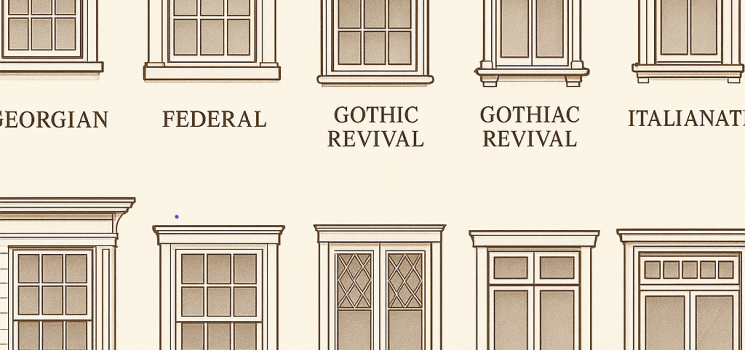
Historical house styles are often distinguished by their window designs. Below is a breakdown of historical house styles and their signature window types, which often reflect the architectural character and period details of the home:


Georgian (1700–1780)
        • Windows: Double-hung sash windows with 6-over-6 or 9-over-9 panes.

        • Details: Symmetrical arrangement, flat arches or simple lintels, often with shutters.

        • Materials: Wood frames, usually painted white.


Federal (1780–1830)
        • Windows: Double-hung sash windows, typically 6-over-6.

        • Details: Frequently include fanlights over doors and elliptical or Palladian windows.

        • Shape: Taller and more slender than Georgian.


Greek Revival (1825–1860)
        • Windows: 6-over-6 or 9-over-9 double-hung.

        • Details: Trim is heavier, with bold lintels or cornices, and sometimes triple windows.

        • Symmetry: Very formal and aligned.


Gothic Revival (1840–1880)
        • Windows: Pointed arched or lancet windows.

        • Details: Often include tracery or leaded glass.

        • Unique Feature: Steep gables often include small attic windows with Gothic arch tops.


Italianate (1840–1885)
        • Windows: Tall and narrow, typically 2-over-2 double-hung.

        • Details: Frequently arched or curved at the top with elaborate hood molds or brackets.


Queen Anne / Victorian (1880–1910)
        • Windows: Mix of 1-over-1 sash, bay windows, and stained or leaded glass.

        • Details: Asymmetrical placement, curved or multi-faceted bays.

        • Ornamentation: Highly decorative, often with colored panes or etched glass.


Colonial Revival (1880–1955)
        • Windows: Double-hung sash with 6-over-6 or 8-over-8 panes.

        • Details: Return to Georgian symmetry and formality, often with shutters.

        • Palladian window usage is revived.


Tudor Revival (1890–1940)
        • Windows: Casement windows with diamond-pane leaded glass.

        • Details: Grouped in twos or threes, framed in dark wood or stone.

        • Bay or oriel windows common.


Craftsman / Bungalow (1905–1930)
        • Windows: Double-hung with 3-over-1 or 6-over-1 panes.

        • Details: Grouped in bands, simple wood trim.

        • Materials: Often wood, sometimes stained.


Prairie (1900–1920)
        • Windows: Horizontal bands of casement windows.

        • Details: Art glass or geometric patterns.

        • Style: Integrated with horizontal emphasis of the home.

Read More

Historical Dormer Styles

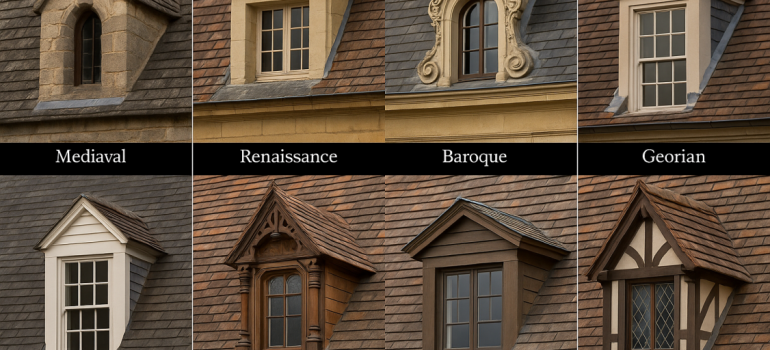
Dormers have evolved over centuries to suit different architectural styles, climates, and functions. Sometimes Dormers are called, “Roofs with dog houses on them.” Here’s a breakdown of historical dormer styles categorized by era and design influence:

🏰 Medieval & Gothic Dormers (12th–15th centuries)

        • Style: Steeply pitched gables with pointed arches.

        • Materials: Stone or timber with heavy lead or slate roofs.

        • Use: Primarily to ventilate and light attics in castles or manor houses.


🏛️ Renaissance Dormers (15th–17th centuries)

        • Style: Classical detailing—columns, pediments, and entablatures.

        • French Influence: The “lucarne” (ornate dormer with decorative scrollwork and pediments) is common in châteaux.

        • Features: Symmetrical placement and integration into formal facades.


🇫🇷 Baroque & Rococo Dormers (17th–18th centuries)

  • Style: Highly ornate with flowing curves, sculpted reliefs, and decorative finials.

  • Roof Shapes: Often incorporated into mansard roofs.

  • Famous Use: Parisian buildings with curved dormers in mansard roofs—still iconic today.


🇬🇧 Georgian Dormers (18th century)

  • Style: Clean lines, symmetry, and minimal ornamentation.

  • Type: Gabled or shed dormers often with sash windows.

  • Placement: Aligned neatly with windows and doors below.


🇺🇸 Colonial & Federal Dormers (18th–early 19th centuries)

  • Style: Modest, functional, and proportional.

  • Type: Gabled or segmental (arched) dormers.

  • Use: Prominent in Colonial Williamsburg and early American homes.


🏡 Victorian Dormers (mid-to-late 19th century)

  • Style: Ornate and varied—includes Gothic Revival, Queen Anne, and Second Empire.

  • Features: Decorative bargeboards, finials, and shingles.

  • Roof Integration: Sometimes compound forms with turrets or towers.


🧱 Craftsman & Arts and Crafts Dormers (early 20th century)

  • Style: Low-pitched shed or gabled dormers with exposed rafters.

  • Materials: Natural wood, stone, and shingled cladding.

  • Philosophy: Emphasized handcrafted, honest materials.


🌆 Tudor Revival Dormers (1920s–1930s)

  • Style: Steep gabled dormers, often with timbering and masonry.

  • Inspiration: English medieval and Elizabethan styles.

  • Roof Details: Asymmetrical, picturesque rooflines.

Read More

Historical Exterior Cornice Drip Edges

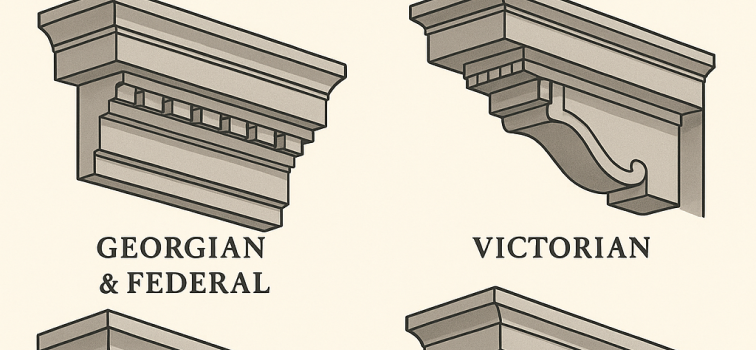
A historical exterior cornice drip refers to a key architectural detail found on classical cornices that helps manage water runoff while adding decorative emphasis. Let’s break it down:

🔍 Definition
        • A cornice is the uppermost section of moldings along the top of a wall or building, often part of the entablature in classical architecture.

A drip (or drip edge, drip molding) is a projecting feature designed to throw water away from the face of the wall to prevent staining, erosion, or water infiltration.


🏛️ Historical Styles with Cornice Drips
1. Greek & Roman Classical Cornices

Feature: Drip groove (cyma recta or cyma reversa moldings), mutules or modillions with overhanging soffits.

Drip Function: The projection itself and carved gutter lines helped divert rain away.

Example: Doric cornices often had a flat corona with a carved drip groove underneath.

2. Renaissance Cornices

Feature: Deep overhangs with egg-and-dart moldings and dentils.

Drip: Often integrated as a sharp edge or cavetto at the bottom of the projecting member.

3. Baroque & Rococo Cornices

Feature: Bold, curved cornices with scrollwork and brackets.

Drip: Water-shedding grooves were hidden in ornamental flourishes or scrolled modillions.

4. Georgian & Federal Cornices

Feature: Straight, symmetrical moldings with dentils or crown profiles.

Drip: A distinct, linear drip edge often built into the fascia or lower molding.

5. Victorian Cornices

Feature: Highly decorative with brackets and multiple layers of moldings.

Drip: Sometimes incorporated metal flashing or pronounced wood projections to manage water.

6. Craftsman Bungalow Eaves

Feature: Wide eaves with exposed rafters.

Drip: Extended rafter tails or small crown moldings beneath the eave carried the drip function.


🧱 Materials Historically Used

Stone: Carefully carved drip lines and projections in classical architecture.

Wood: Layered moldings with crown or ogee profiles in early American homes.

Terra cotta or plaster: Used in Beaux-Arts or Italianate buildings with ornate cornices.

Lead or copper flashing: Sometimes added for durability on top of projecting moldings.

Read More

What are The Purposes of Pilasters in Classical Interior Designs

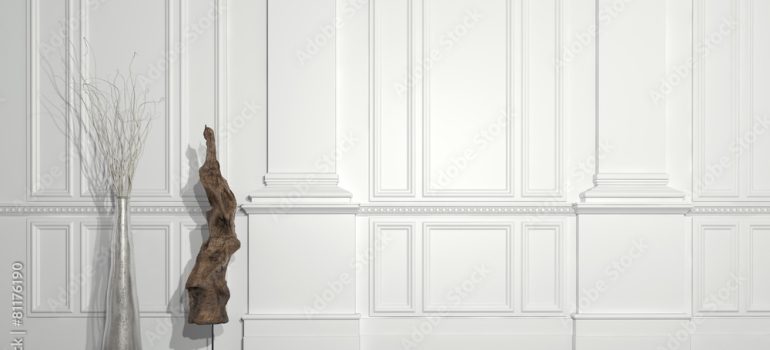
A pilaster is a shallow, rectangular column that projects slightly from a wall and typically has a base and capital, like a full column. It is primarily decorative, giving the illusion of a supporting column and adding classical architectural detail without bearing any structural load.

Aesthetic Enhancement
      • Mimic columns: Pilasters imitate the appearance of classical columns but are flat and project only slightly from the wall.

      • Add rhythm and proportion: They divide wall space visually and add a sense of classical order and balance.

      • Frame elements: Often used to frame doors, windows, fireplaces, or wainscoting panels for a more formal or traditional look.

Architectural Styling
        • Used in Classical, Neoclassical, Renaissance, Georgian, and Colonial Revival architecture to evoke grandeur and timelessness.

        • They may include bases, shafts, and capitals that reflect the classical orders (Doric, Ionic, Corinthian, etc.).

Visual Support
        • Though mostly ornamental, pilasters give the illusion of structural support, especially beneath entablatures, arches, or pediments.

Space Definition
        • Help define transitions between wall surfaces or architectural zones within a room.

Here are examples of how pilasters are used in modern interior design, blending classical elements with contemporary aesthetics:

Framing Doorways
        • Use: Pilasters on either side of a doorway create a grand entrance, especially when topped with a pediment or entablature.

        • Modern Twist: Simplified profiles with clean lines, often painted the same color as the wall for a minimalist look.

Built-In Bookcases or Cabinets
        • Use: Flanking cabinetry or shelving units to make them appear custom-built and architecturally integrated.

        • Modern Twist: Flat or square pilasters in natural wood or matte black finishes for a sleek contrast.

Accent Walls
        • Use: Create a sense of formality by dividing a large wall into “bays” using pilasters and panel moulding.

        • Modern Twist: Combine with LED lighting or geometric paneling for a transitional or modern-classic fusion.

Fireplace Surrounds
        • Use: Pilasters on each side of a fireplace to frame the mantel and elevate the focal point.

        • Modern Twist: Use stone, metal, or textured finishes for a contemporary feel while preserving the classical form.

Hallways and Entryways
        • Use: Spaced along corridor walls to simulate depth and rhythm in otherwise flat or narrow spaces.

        • Modern Twist: Integrated with uplighting or indirect lighting coves to create shadows and dimension.

Read More

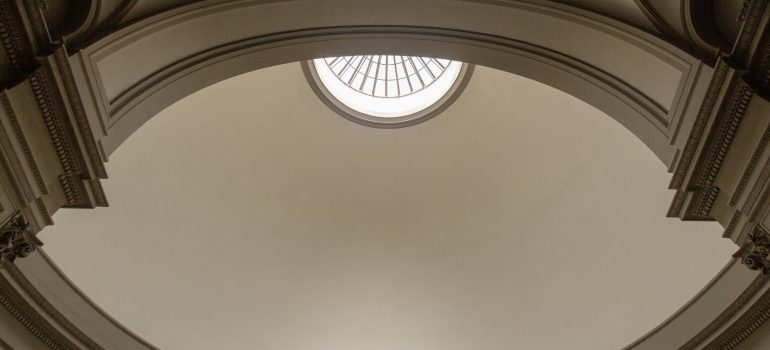
Why Do Houses Have Ceiling Domes at the Top of Circular Staircases?

Ceiling domes are often placed above circular staircases for a blend of aesthetic, architectural, and functional reasons:

Aesthetic Emphasis
        • Visual Drama: Domes provide a grand, elegant focal point, enhancing the sense of vertical space and movement.
        • Architectural Harmony: The circular shape of the dome complements the spiral or curved geometry of the staircase below, creating a sense of symmetry and intentional design.
Natural Light
        • Many dome ceilings incorporate skylights or oculi (central openings) to bring daylight into the staircase, which is often an interior zone without windows.
Spatial Expansion
        • Domes give the illusion of a taller, airier space by drawing the eye upward. This is especially effective in vertical circulation areas like staircases that already emphasize height.
Acoustics
        • In larger homes, domes can improve or modulate sound projection—either for echoing grandeur or soft diffusion of ambient sound.
Historic and Classical Influence
        • The tradition comes from classical and renaissance architecture, where domes symbolized wealth, intellect, or religious ideals. High-end residential architecture often borrows these cues to signal status and taste.
Read More